
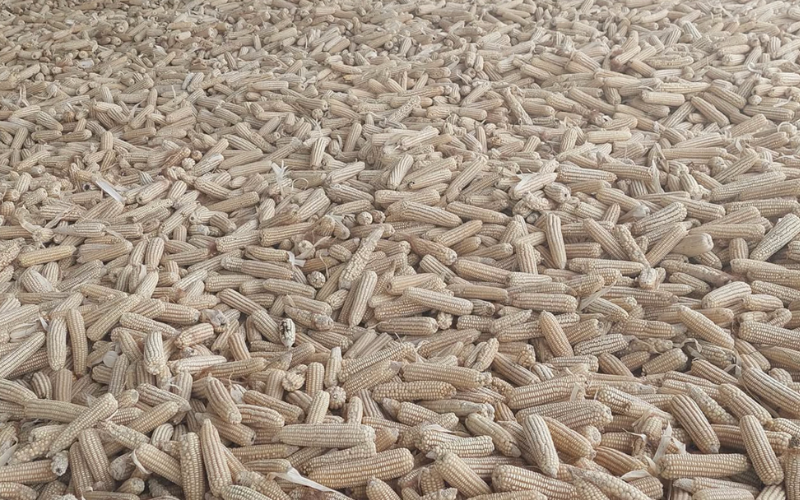
Green fodder shortage is a common problem for livestock farmers in Pakistan, especially in peak summer. Pak Afgoi maize is one of the most popular answers to this a fast-growing, high-biomass variety bred specifically for feeding cattle and buffalo, not for grain.
What is Pak Afgoi?
Pak Afgoi (also written Pak-Afgoi, and marketed under names like SG-2002) is a fodder-specific maize variety grown widely across Punjab, Sindh, and KPK in Pakistan. It is developed/distributed by sources including the Punjab Seed Corporation (PSC) and various private seed companies (JPL, IR Farm, etc.), so seed quality and exact yield claims can vary a bit by supplier always buy certified seed.
Plant & Crop Characteristics
Pak Afgoi is grown exclusively for green fodder and silage, not for grain. It is not meant to be harvested as dry corn.
Plant type: Tall, thick-stalked plants with broad, succulent leaves and heavy biomass
Maturity: Fast-growing; ready for first cut around 55–65 days, full crop duration roughly 90–110 days depending on region and number of cuts
Seed purity: Certified seed typically rated around 95% purity
Fodder quality: High digestibility, juicy stems, good palatability for cattle and buffalo
Stress tolerance: Performs better than many other fodder varieties under drought and even under wastewater/heavy-metal stress conditions useful where irrigation water is limited or of poor quality Yield potential:
Roughly 40–50 tons/hectare of green fodder under good management (commercial listings quote ~700–800 maunds/acre as a rough field equivalent).
Sowing Time
Maize fodder in Pakistan is typically sown in two main windows:
- Kharif (spring/summer): March–July, with peak sowing in April–June
- Can also be sown in short intervals through summer for staggered/successive green fodder supply, since livestock need continuous green feed
Land Preparation
Plough the field 2–3 times to get a fine, well-pulverized seedbed.
Level the field properly (laser leveling is ideal) for even water distribution.
Apply farmyard manure (FYM), about 8–10 tons/acre, before the last ploughing.
Seed Rate & Sowing Method
- Seed rate: Roughly 25–30 kg/acre for broadcast sowing (fodder maize is sown thicker than grain maize since leaf/stem mass is the target, not cobs)
- Method: Can be broadcast or drilled in rows
- If drilled, keep row spacing around 20–25 cm to allow dense stand for maximum biomass
- Sowing depth: 4–5 cm
Irrigation
- First irrigation immediately after sowing (or sow into pre-irrigated/wet soil — “rauni”)
- Subsequent irrigations every 7–10 days depending on weather and soil type
- Pak Afgoi is noted for better drought tolerance than many fodder varieties, but yield and juiciness drop sharply under water stress, so don’t rely on this as an excuse to under-irrigate
- Avoid waterlogging maize is sensitive to standing water
Fertilizer Recommendation (typical for fodder maize, per acre)
| Nutrient | Amount |
|---|---|
| Nitrogen (N) | 60–80 kg |
| Phosphorus (P2O5) | 40–50 kg |
| Potash (K2O) | 25–30 kg (on deficient soils) |
- Apply full phosphorus and potash, plus 1/3 of nitrogen at sowing
- Split remaining nitrogen into 2 doses at first and second irrigation/growth stage
- Adjust based on your local soil test if available
Weed Control
- Early weeding (25–30 days after sowing) is important since maize is a wide-leaved but slow-establishing crop initially
- One or two hand weedings/hoeings are usually enough for a single-cut fodder crop
- Pre-emergence herbicides can be used but are less common for fodder-only crops due to feeding safety concerns — consult local agri extension before using any herbicide on fodder crops.
Harvesting
- Cut when the crop is about 50% flowered (tasseling/silking stage) for the best balance of yield and nutritive value
- Typical harvest window: 55–65 days after sowing for green feeding; can go slightly longer if aiming for silage
- Cut close to the ground using a sickle or fodder harvester
- For silage: chop and ensile at the correct moisture stage (roughly 65–70% moisture) for good fermentation
Uses
- Green (chara) feeding: Direct cut-and-carry feeding to cattle/buffalo.
- Silage: Excellent for silage-making due to good sugar and moisture content.
- Supports higher milk yield in dairy animals due to good digestibility and protein content.
- Some sources note improved animal resistance to lice/parasites when fed good quality green fodder, though this is more a general livestock-health benefit of quality nutrition than a unique trait of the variety itself.
Common Problems
- Fall armyworm: A major pest of maize in Pakistan now; scout regularly, especially in whorl stage.
- Stem borer: Can affect stand and biomass.
- Waterlogging/poor drainage: Causes root rot and yellowing.
- Late/thin sowing: Reduces the leafy biomass that fodder maize is grown for